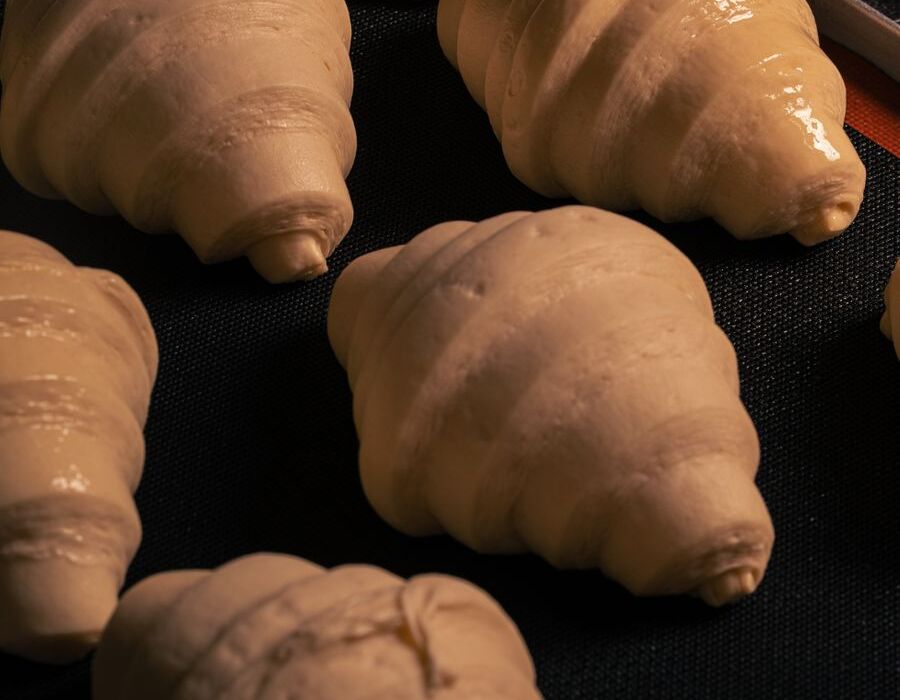
On the first day we mix the dough and let it rest overnight in the cold. A slow, cool rest gives the yeast time to build flavour without making the dough lively and hard to handle.
On the second day comes the lamination. A sheet of cold butter is wrapped in the dough, rolled out and folded, three times over, with a rest in the cold between each fold. Each fold multiplies the layers. If the butter gets too warm it melts into the dough and the layers disappear, which is why we laminate first thing, while the kitchen is still cool.
On the third morning we cut and roll each croissant by hand, let them rise, glaze them with egg and bake them in two rounds, at eight and at eleven. That is why we sometimes sell out by noon: the dough for tomorrow was started two days ago, and there is no way to make more today.