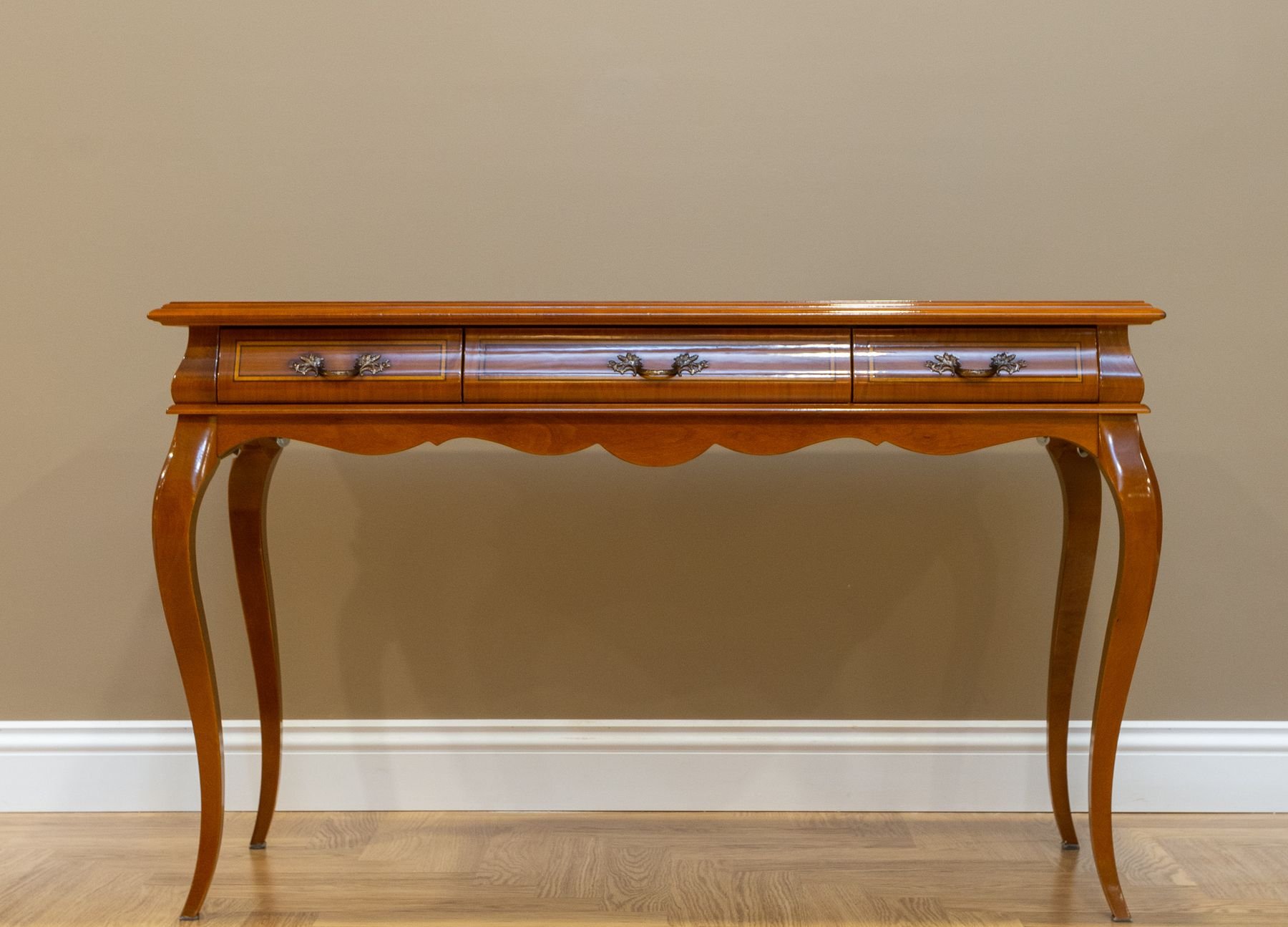
The Currituck Sideboard
64"W × 19"D × 32"H
$4,200
Furniture designer-maker · Asheville, NC
Solid walnut, white oak and ash dining tables and casegoods, made to order in Asheville, NC — and a small run of current-stock pieces already built. Every commission starts with a to-scale shop drawing, not a quote: the price follows the cut list the drawing makes possible, not the other way around.
“The drawing is the receipt for the price, not the other way around. I’m not going to hand a client a board-foot number I haven’t earned by drawing the piece first.” — Adaeze Okafor
The document a client actually gets
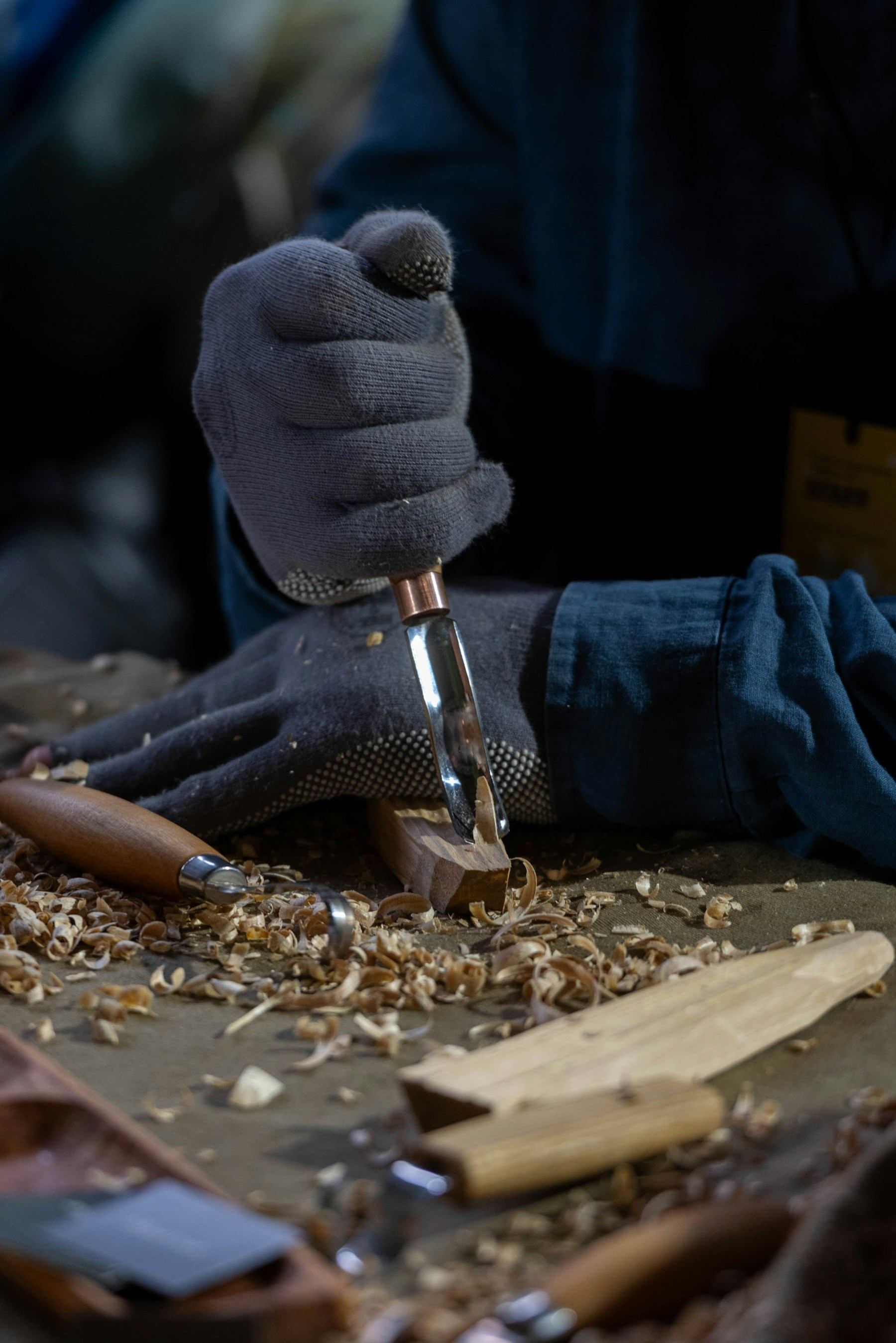
Before a board is bought, Adaeze drafts a to-scale elevation of the piece — front and side, dimensioned, at a stated scale. This is the actual drawing for The Blue Ridge Dining Table, the commission demonstration this whole page is built around.
Every piece, its own numbers
Overall width × depth × height, plus seat height, apron clearance or leaf capacity where a piece actually has one — not every piece needs the same fields.
White oak (Quercus alba)
Joinery: Breadboard ends, draw-bored, Mortise & tenon, apron to leg, Through-tenon stretcher.
Black walnut (Juglans nigra)
Joinery: Dovetailed case corners, Mortise & tenon face frame.
White oak (Quercus alba)
Joinery: Dovetailed case corners, Sliding-dovetail shelf.
Ash (Fraxinus americana)
Joinery: Mortise & tenon, apron to leg, Drawbore pin.
Black walnut (Juglans nigra)
Joinery: Through-tenon legs, Wedged tenon.
The document that doesn't exist until the drawing is approved
A board foot is bought before the piece exists — (thickness in × width in ×
length ft) ÷ 12 — and this is the cut list for The Blue Ridge Dining Table, computed against
the drawing above, not typed in from a guess.
| Part | Species | Sawing | Finished T × W × L | Qty | Board ft | Joinery |
|---|---|---|---|---|---|---|
| Top boards | White oak | Flatsawn | 0.875″ × 10.5″ × 84″ | 4 | 21.4 | Glued panel, biscuit-aligned |
| Breadboard ends | White oak | Quartersawn | 0.875″ × 3″ × 42″ | 2 | 1.5 | Draw-bored mortise & tenon |
| Apron, long rails | White oak | Quartersawn | 0.875″ × 5″ × 76″ | 2 | 4.6 | Mortise & tenon to leg |
| Apron, short rails | White oak | Quartersawn | 0.875″ × 5″ × 34″ | 2 | 2.1 | Mortise & tenon to leg |
| Legs | White oak | Quartersawn | 2.25″ × 2.25″ × 29″ | 4 | 4.1 | Mortised for apron & stretcher |
| Extension leaves | White oak | Flatsawn | 0.875″ × 12″ × 42″ | 2 | 6.1 | Alignment pins & pull-out slides |
| Net cut-list total | 39.8 bf | |||||
| Purchase total, +15% furniture-grade waste | 45.8 bf | |||||
Furniture-grade projects add roughly 15% waste on top of the net cut list for sawing around checks, sapwood and grain runout — 20% on rough or lower-grade stock. No dollar figure is shown here on purpose: material cost is board feet × a lumber price that moves with the yard, and that multiplication only happens once, at ordering, against a real invoice.
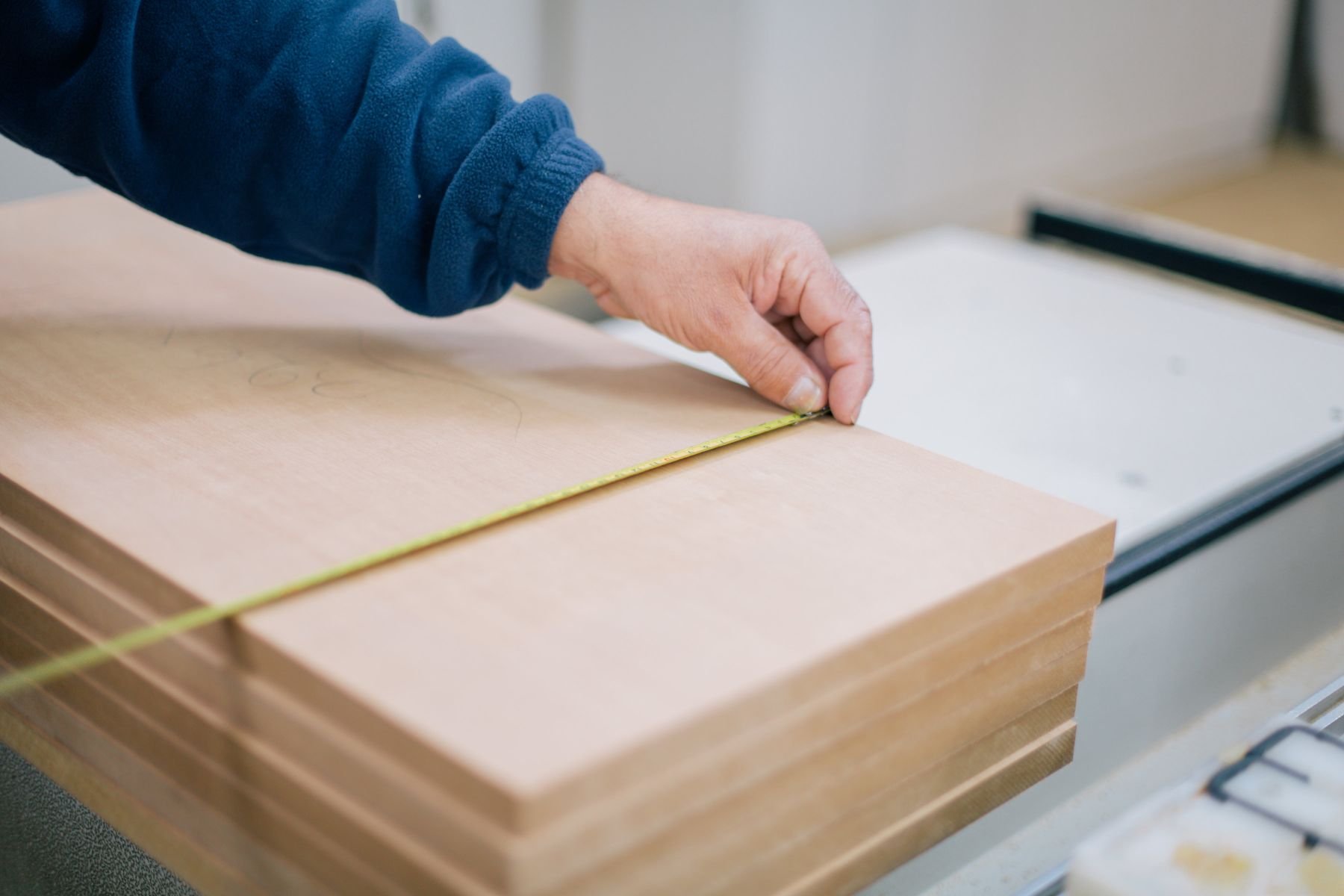
Every board checked against the shop's 6–8% target the moment it comes off the truck — kiln-dried is a target a mill dries to, not a guaranteed state, so it gets verified before a joint is cut.
| Board ID | Species | Part | MC at intake | Target MC | Status |
|---|---|---|---|---|---|
| BR-101 | White oak | Top board 1 | 7.1% | 6–8% | Within target |
| BR-102 | White oak | Top board 2 | 7.4% | 6–8% | Within target |
| BR-103 | White oak | Top board 3 | 6.8% | 6–8% | Within target |
| BR-104 | White oak | Top board 4 | 7.2% | 6–8% | Within target |
| BR-105 | White oak | Breadboard ends | 6.9% | 6–8% | Within target |
| BR-106 | White oak | Legs & apron | 7.5% | 6–8% | Within target |
It never stops the way a fired pot does
Cellulose is hygroscopic: a board's width changes with the season, for the life of the piece — not once, like a kiln firing, but continuously.
width × (species shrinkage % ÷ fiber-saturation point) × Δ
        moisture content
— tangential shrinkage (parallel to the growth rings, the wide face of
most boards) runs roughly 6–10% green-to-oven-dry; radial shrinkage (through the rings)
runs about half that. Longitudinal movement, along the grain, is under 0.1% and treated as zero.
Run against The Blue Ridge Dining Table's widest panel — the 42″ top — using white oak's own published tangential-shrinkage coefficient, not a rounded-off "solid wood moves" shrug.
| Species | White oak (Quercus alba) |
|---|---|
| Panel | Tabletop, four boards glued, flatsawn |
| Panel width | 42″ |
| Tangential shrinkage (species) | 10.5% |
| Fiber saturation point (assumed) | 28% MC |
| Heated-winter equilibrium MC | 6% |
| Humid-summer equilibrium MC | 10% |
| Δ moisture content | 4 points |
| Computed seasonal movement | ± 0.63″ across the range |
This is why breadboard ends, floating panels and elongated screw slots exist — see joinery below. Quartersawn boards move roughly half as much across their width as flatsawn boards from the same log, which is why the breadboard ends and legs above are quartersawn even though the top itself is flatsawn for figure.
Three species, one shop
Black walnut, white oak and ash — every piece on this page is one of the three, chosen for working properties, not just colour.
| Species | Janka | Target MC | Tangential | Radial | T/R ratio | Sawing note |
|---|---|---|---|---|---|---|
| Black walnutJuglans nigra | 1010 lbf | 6–8% | 7.8% | 5.5% | 1.4× | Flatsawn for open face grain on casegood panels; quartersawn for legs and stretchers, where stiffness matters more than figure. |
| White oakQuercus alba | 1360 lbf | 6–8% | 10.5% | 5.6% | 1.9× | Quartersawn for tabletops, breadboard ends and legs — the widest movement of the three species, so stability is worth more than figure here. |
| AshFraxinus americana | 1320 lbf | 6–8% | 7.8% | 4.9% | 1.6× | Flatsawn for the open, straight grain a console top wants to show; quartersawn where a slimmer leg profile needs the extra stiffness. |
What holds, and why
Five terms, what each does, and what fails without it.
Hardwax oil vs. conversion varnish
Two finish systems, stated with real dry and cure times — not "a few coats of finish."
| System | Coat | Product | Dry time | Cure time | Recoat window |
|---|---|---|---|---|---|
| Hardwax oil | Base coat | Pure hardwax oil, natural | 4–6 hrs | 7 days | After 24 hrs |
| Hardwax oil | Finish coat, buffed | Pure hardwax oil, natural | 4–6 hrs | 7 days | — |
| Conversion varnish | Sealer coat | Pre-catalyzed sealer | 30–45 min | 5–7 days | 2–4 hrs |
| Conversion varnish | Top coat ×2 | Conversion varnish topcoat | 30–45 min | 5–7 days | 2–4 hrs |
Lead time is a consequence, not an inconvenience
“The drawing Adaeze sent us before we’d paid a dollar for materials told us more about the table than any showroom floor model ever could — species, joinery, even how much the top would move in our house. My husband and I signed off on the drawing, not a guess.” — Marcus & Rebecca Coyle, commission clients, Asheville, NC
| Band | Example pieces | Lead time | Deposit | Balance |
|---|---|---|---|---|
| Small | Console tables, benches | 3–6 weeks | 50% on drawing approval | Due on delivery |
| Medium | Sideboards, credenzas | 6–10 weeks | 50% on drawing approval | Due on delivery |
| Large | Dining tables, extension tables | 8–14 weeks | 50% on drawing approval | Due on delivery |
Already built, already costed
Fixed price, distinct from the commission section's withheld price — these pieces exist, so their cut lists already happened.
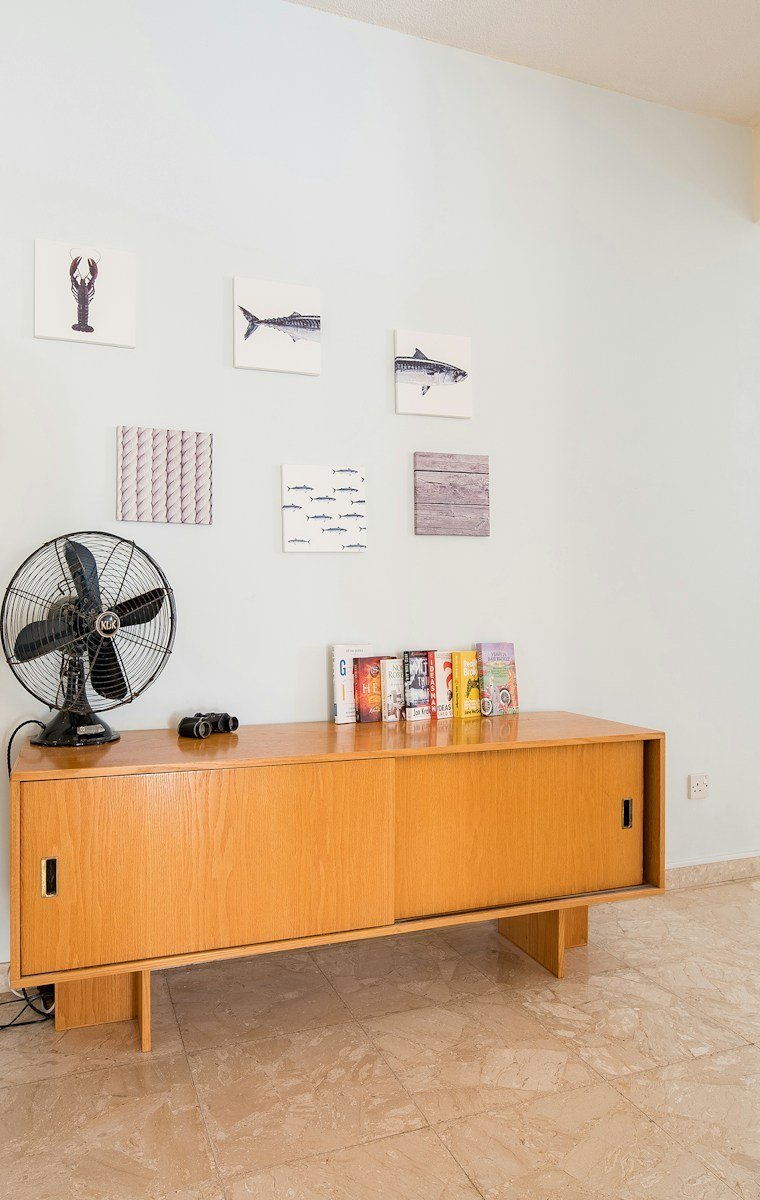
64"W × 19"D × 32"H
$4,200
58"W × 18"D × 28"H
$3,850
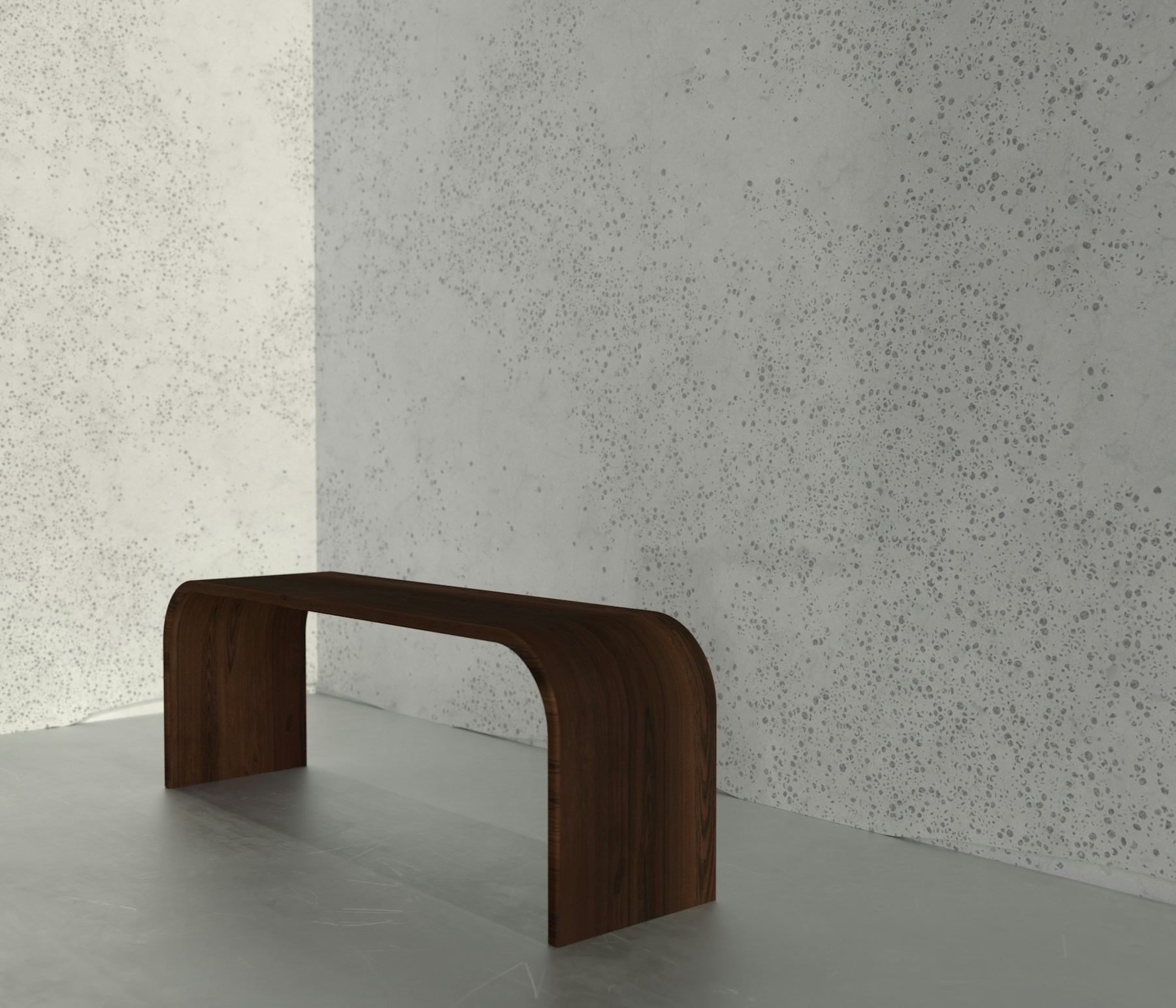
48"W × 14"D × 30"H
$1,650
58"W × 14"D × 18"H
$980
Asheville, on purpose
Adaeze Okafor trained in fine woodworking before opening her own shop — the kind of program Asheville has room for because the city has quietly become a real craft-furniture hub, home to the Center for Craft and Warren Wilson College's fine woodworking program. That's not incidental to where the shop is — it's most of why it's here.
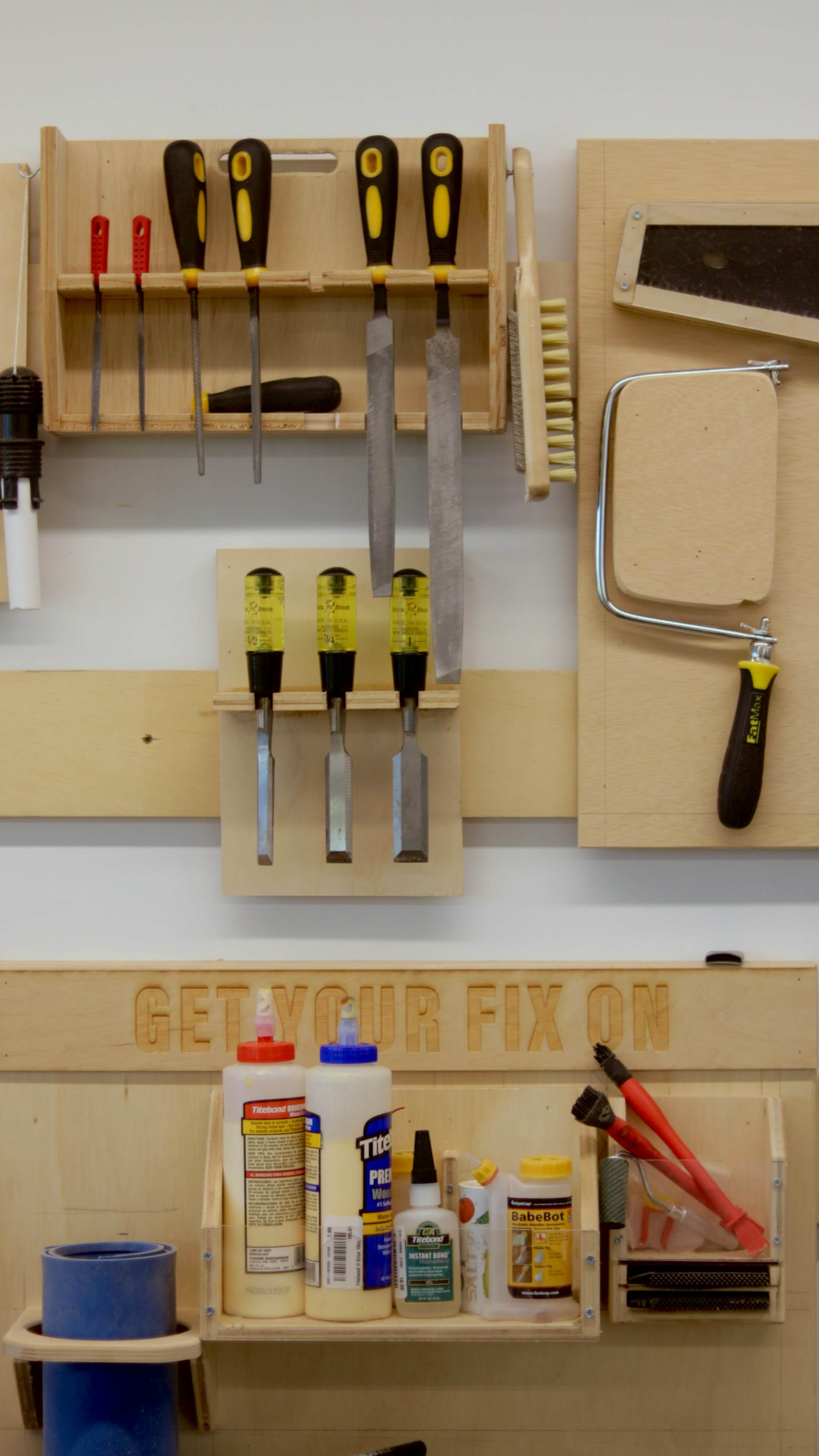
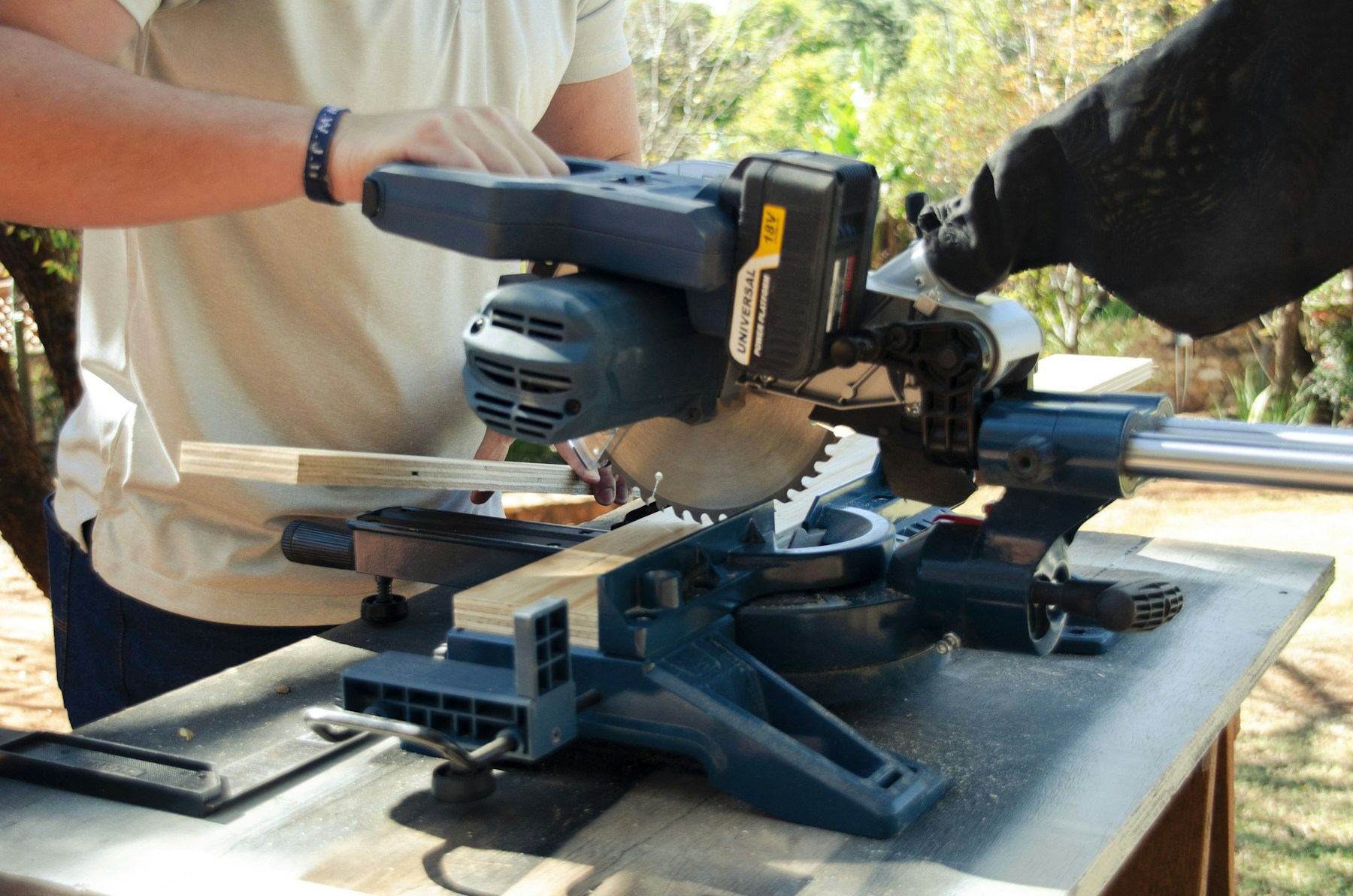
A small shop on 118 Depot St, Unit 6, Asheville — hand tools within reach of the bench, a moisture meter that gets used on every board before it's cut, and machines sized for one person running them.
Kiln-dried lumber bought from regional hardwood yards within a day's drive, checked against the 6–8% target on arrival — see the moisture-content record above for exactly what that check looks like on a real order.
LinkedIn is fastest, email works too — see contact below.
FAQ
Because lumber is priced and sold by the board foot, and board footage doesn’t exist until the cut list does — which doesn’t exist until the shop drawing is approved. See the cut list above for exactly how that arithmetic runs once it can.
Yes, by a small, computable amount — see the wood-movement worked example above. That’s exactly why solid tops ship with breadboard ends, floating panels or elongated screw slots instead of being glued rigid across the grain.
Sometimes — if it’s kiln-dried to 6–8% moisture content and there’s enough of it, net of the cut list plus 15–20% waste. Raise it at the inquiry stage so it can be checked before the drawing is drafted.
Yes, within about a day’s drive. Delivery and install are quoted separately once the piece is built, based on distance — the same “not until it’s real” approach as the piece itself.
Start a commission
Piece type, rough dimensions and timeline — enough for Adaeze to reply with what happens next, not a price.